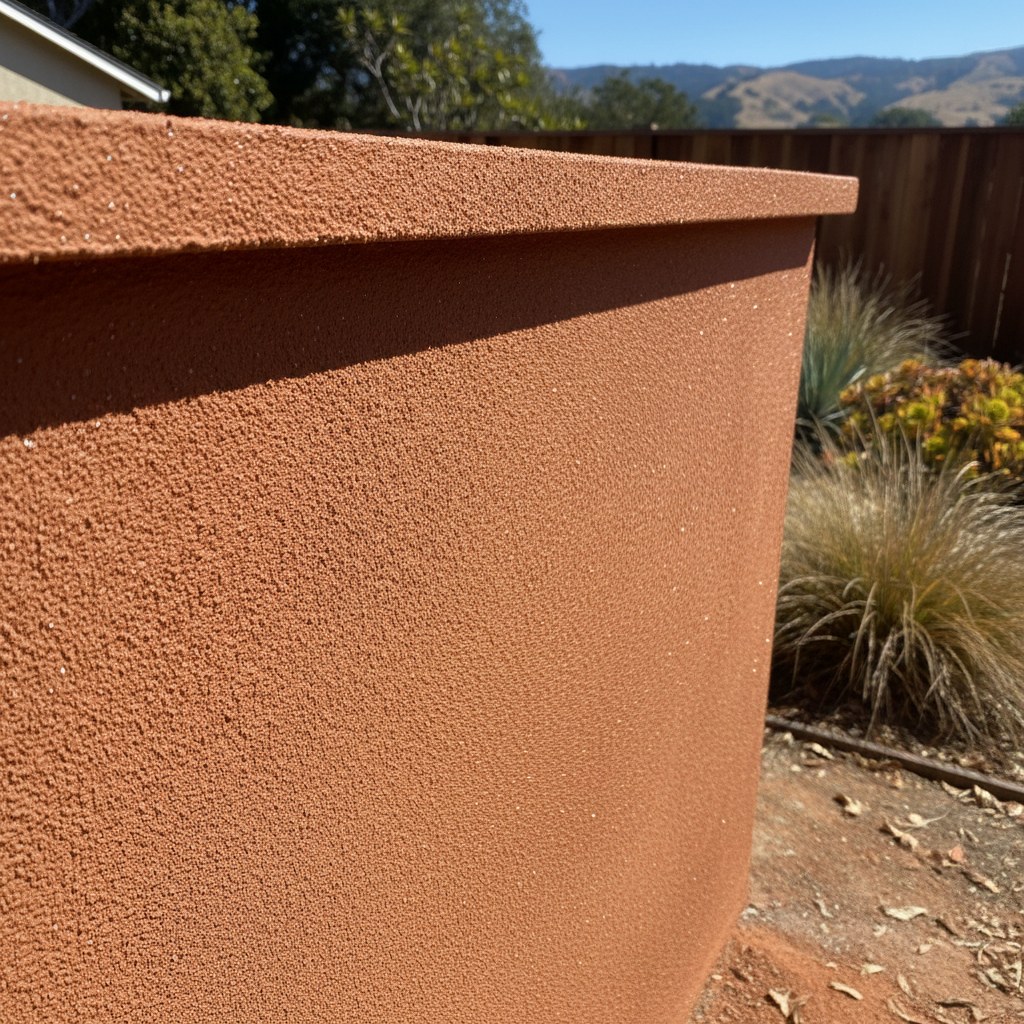
Ever look at your exterior walls and feel like your house is aging faster than it should? Out here in the Pajaro Valley, the morning marine layer rolling off Monterey Bay beats up exterior finishes year after year. When homeowners call Watsonville Stucco & Plastering about tired, faded, or hairline-cracked walls, Redashing usually comes up. Watsonville Stucco & Plastering gets a ton of questions about what Redashing actually involves. We will break down the most common things people ask before we start working on a house in Watsonville, CA.
Can you redash over any existing stucco surface?
Not always, and that is the honest truth. If your base coat is solid, bonded tight to the lath, and just weathered on the surface, then yes, Redashing is a great fit. But if the old stucco is hollow, crumbling away from the wood framing, or soaked through with moisture damage, putting a new dash coat over it is not going to solve the problem. Watsonville Stucco & Plastering has to tap on walls all over the valley to listen for that hollow sound. If the substrate is shot, we have to fix the root cause first.
How do you match the texture of my old plaster?
Texture matching is an important part of Stucco Repair. Whether your place has a heavy Spanish lace, a traditional Santa Barbara smooth finish, or a standard Monterey dash, you cannot just slap a random pattern on and hope nobody notices. Watsonville Stucco & Plastering looks closely at aggregate size, how heavy the trowel hand was, and how the original crew floated it. We always do a sample board right on the side of your garage first so we can sign off on it together before touching the main living areas of your Watsonville home.
Will a new redash stop water from getting into my walls?
It helps a lot with weather resistance, but let us be clear about what Redashing is. It is a fresh finish layer, usually around an eighth to a quarter-inch thick. Redashing seals up hairline cracks and sheds driving rain very well. However, if you have structural cracks or failing flashing around your windows near Lakeview or down off Freedom Boulevard, a cosmetic dash will not solve a leaking window frame. Watsonville Stucco & Plastering checks your caulking and weep screeds before doing any finish work.
How long am I going to have scaffolding and workers around my house?
Most standard residential Redashing jobs take anywhere from 3 to 5 days depending on the square footage and drying times. Day one is usually power washing, masking, and making any necessary patch repairs. Day two is the bonding agent and the brown or scratch coat if needed. Days three and four are for spraying or hand-applying that final color coat. Keep in mind that coastal fog can slow down curing times because the humidity stays high well into the morning in Watsonville, CA.
Do I need to paint my house after getting it redashed?
No, you do not need to paint your house, and that is one of the biggest perks of the process. Watsonville Stucco & Plastering uses integrally colored finish coats mixed right at the plant or on-site, meaning the pigment is baked directly into the cementitious plaster. You will not have to worry about peeling latex paint or chipping layers down the road. Stucco in Watsonville weathers naturally and holds its color against the California sun far better than standard paint ever could.
Got a specific wall issue on your property that has been bugging you? Reach out to Watsonville Stucco & Plastering. Watsonville Stucco & Plastering provides Stucco services for homes in Watsonville, CA, and we are always ready to visit your property, take a look at your particular setup, and give you a straight assessment of what your exterior needs.